Baking and boiling sweet potatoes produce different nutrition profiles primarily due to water content changes and cooking temperature effects. A 100-gram serving of baked sweet potato typically contains around 90 calories, 21 grams of carbohydrates, and 3.3 grams of fiber, while the same weight of boiled sweet potato provides approximately 76 calories, 17.7 grams of carbohydrates, and 2.5 grams of fiber. Baking concentrates nutrients by reducing moisture, whereas boiling increases water content and may leach small amounts of water-soluble vitamins and minerals into the cooking liquid. The glycemic response, vitamin retention, and mineral availability also shift depending on cooking method, temperature, and duration. Understanding these differences helps you interpret nutrition labels accurately and choose preparation methods that align with your dietary goals.
What Baking Does to Sweet Potato Nutrition
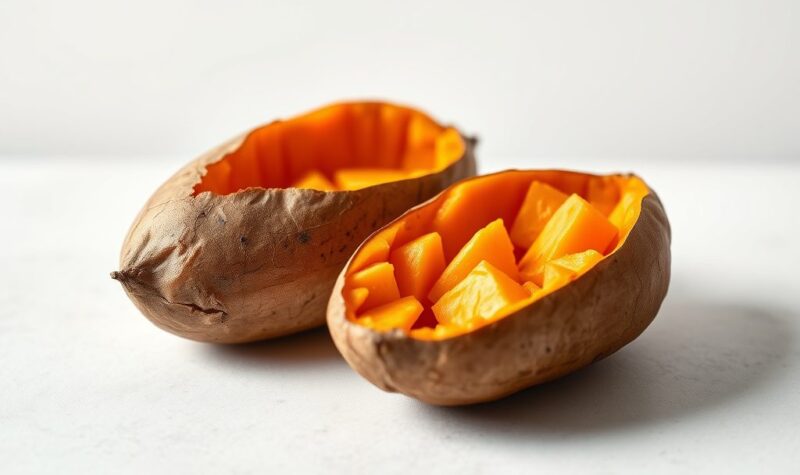
Baking sweet potatoes at temperatures between 350°F and 425°F (175°C to 220°C) drives off moisture, concentrating carbohydrates, fiber, and most micronutrients per 100 grams. A medium sweet potato (about 130 grams raw) may weigh closer to 100 grams after baking, depending on oven temperature and time. This moisture loss increases calorie density: baked sweet potato flesh typically delivers 90 calories per 100 grams, compared to roughly 86 calories per 100 grams for raw sweet potato.
Baking also enhances the bioavailability of beta-carotene, the orange pigment that converts to vitamin A in the body. Heat softens cell walls, making carotenoids easier to absorb. However, prolonged high-heat baking can degrade some vitamin C—a water-soluble, heat-sensitive nutrient. Potassium, magnesium, and fiber remain largely stable during baking because they are not water-soluble and do not evaporate. For detailed guidance on how cooking alters nutrient profiles, see How Cooking Changes Nutrition Facts.
What Boiling Does to Sweet Potato Nutrition
Boiling sweet potatoes in water increases their final moisture content, diluting calories and some nutrients per 100 grams. A 100-gram serving of boiled sweet potato typically contains about 76 calories and 17.7 grams of carbohydrates, compared to 90 calories and 21 grams in the same weight of baked sweet potato. This difference reflects water absorption during boiling, which adds weight without adding energy.
Water-soluble vitamins—particularly vitamin C and certain B vitamins like thiamin and folate—can leach into boiling water. The extent of loss depends on cooking time, water volume, and whether you discard or consume the cooking liquid. Potassium and other minerals may also migrate into the water, though losses are generally modest. Fiber content per 100 grams is lower in boiled sweet potato (around 2.5 grams) than in baked (around 3.3 grams), again due to water dilution rather than fiber destruction. For broader context on raw versus cooked nutrient shifts, visit Raw vs Cooked Nutrition.
Comparing Baked and Boiled Sweet Potato Per 100 Grams
When comparing baked and boiled sweet potatoes, always check whether the nutrition facts are reported per 100 grams or per serving. A 100-gram comparison isolates the effect of cooking method, while a whole-potato comparison depends on the starting weight and final yield. Below is a representative comparison based on USDA FoodData Central entries:
| Nutrient | Baked (100 g) | Boiled (100 g) |
|---|---|---|
| Calories | ~90 kcal | ~76 kcal |
| Carbohydrates | ~21 g | ~17.7 g |
| Fiber | ~3.3 g | ~2.5 g |
| Protein | ~2 g | ~1.4 g |
| Potassium | ~475 mg | ~337 mg |
| Vitamin C | ~19 mg | ~12 mg |
| Vitamin A (RAE) | ~961 µg | ~709 µg |
These values illustrate that baking yields a more nutrient-dense product per gram, while boiling produces a lighter, more hydrated option. Neither method is universally preferable; your choice depends on whether you prioritize calorie density, texture, or ease of digestion.
Glycemic Response and Starch Gelatinization
Cooking method influences starch structure and glycemic response. Baking at higher temperatures gelatinizes starch more completely, making it easier to digest and potentially raising blood glucose faster. Boiling also gelatinizes starch, but the lower cooking temperature and added moisture may slow digestion slightly. Some research suggests that cooling cooked sweet potatoes increases resistant starch, which resists digestion and may moderate glycemic impact, regardless of whether the potato was baked or boiled.
If you are monitoring blood glucose, consider portion size, cooking time, and whether you consume the sweet potato warm or cold. Pairing sweet potato with protein, fat, or fiber-rich foods can further moderate glycemic response. For additional preparation-impact insights, explore Preparation Impact.
Common Mistakes When Comparing Baked and Boiled Sweet Potato
One frequent error is comparing a whole baked sweet potato to a whole boiled sweet potato without accounting for weight changes. A 130-gram raw sweet potato may yield 100 grams baked but 140 grams boiled, depending on water absorption. Always compare equal weights—typically 100 grams—to isolate the effect of cooking method.
Another mistake is assuming that all nutrient losses during boiling are significant. While vitamin C and some B vitamins do leach into water, the practical difference is often modest if you consume the cooking liquid or cook for a short time. Conversely, assuming that baking always preserves more nutrients overlooks the fact that high heat can degrade heat-sensitive vitamins.
Finally, some readers compare packaged sweet potato products—such as canned or frozen—without checking whether they were pre-cooked by baking, boiling, or steaming. Processing history affects the baseline nutrition profile. For source-linked records and FDC IDs, use Nutrition Lookup.
When to Choose Baked Sweet Potato
Baked sweet potato is a practical choice when you want concentrated flavor, firmer texture, and higher nutrient density per gram. It works well for meal prep, stuffed sweet potato recipes, and situations where you prefer a drier, caramelized surface. Baking also maximizes beta-carotene bioavailability, which may be relevant if you are seeking to increase vitamin A intake from plant sources.
If you are managing calorie intake and prefer smaller portions with more fiber and potassium per gram, baked sweet potato offers a more compact nutrient package. However, be mindful of added fats or toppings, which can increase total calories significantly.
When to Choose Boiled Sweet Potato
Boiled sweet potato is a practical choice when you want a softer, moister texture and a lighter calorie load per 100 grams. It is easier to mash, blend into soups, or incorporate into baby food. Boiling is also faster and requires less attention than baking, making it convenient for batch cooking.
If you consume the cooking liquid—for example, in a stew or soup—you recapture some of the water-soluble vitamins and minerals that leach out. This approach minimizes nutrient loss and adds flavor to the dish. Boiled sweet potato may also be gentler on digestion for some individuals, though this varies by person.
Practical Checklist for Comparing Baked and Boiled Sweet Potato
- Check the weight basis: Compare per 100 grams, not per whole potato, to isolate cooking-method effects.
- Note moisture content: Baked sweet potato is drier and more calorie-dense; boiled is wetter and lighter per gram.
- Consider vitamin C: Boiling may reduce vitamin C more than baking, especially with long cooking times and discarded water.
- Assess beta-carotene: Baking enhances bioavailability of this vitamin A precursor.
- Account for cooking liquid: If you consume the water used for boiling, you recapture some leached nutrients.
- Factor in texture and use: Baked is firmer and sweeter; boiled is softer and easier to mash.
- Review glycemic response: Both methods gelatinize starch; cooling increases resistant starch regardless of method.
- Use source-linked data: Verify values with Nutrition Lookup for specific FDC entries.
Frequently Asked Questions
Does baking sweet potato increase sugar content?
Baking does not add sugar, but it concentrates existing sugars by reducing moisture. The perceived sweetness also increases because heat breaks down starches into simpler sugars and caramelizes surface sugars, enhancing flavor.
Is boiled sweet potato lower in calories than baked?
Yes, per 100 grams. Boiled sweet potato absorbs water, which dilutes calories. A 100-gram serving of boiled sweet potato contains roughly 76 calories, compared to about 90 calories for the same weight of baked sweet potato.
Which method retains more vitamin C?
Baking generally retains more vitamin C than boiling, because boiling leaches water-soluble vitamins into the cooking water. However, very high baking temperatures or long cooking times can also degrade vitamin C. Shorter cooking times and consuming boiling liquid minimize losses.
Can I use the same nutrition label for baked and boiled sweet potato?
No. Nutrition labels for baked and boiled sweet potato reflect different moisture levels and nutrient densities. Always check the preparation method listed on the label or in the database entry. For method-specific records, see How Cooking Changes Nutrition Facts.
Does boiling sweet potato reduce potassium?
Boiling can leach some potassium into the cooking water, but the loss is typically modest. Per 100 grams, boiled sweet potato contains less potassium than baked primarily because water dilutes the concentration, not because large amounts are destroyed.
Which method is easier for meal prep?
Both methods work for meal prep. Baking requires less hands-on time but takes longer overall. Boiling is faster and easier to scale for large batches. Choose based on your texture preference and whether you plan to consume the cooking liquid.
Sources and Methodology
Nutrient values for baked and boiled sweet potato are drawn from the USDA FoodData Central database, which provides peer-reviewed, laboratory-analyzed data for common foods and preparation methods. Specific FDC IDs for baked sweet potato (flesh, without salt) and boiled sweet potato (flesh, without salt) are available through Nutrition Lookup. Glycemic response and starch gelatinization research is based on published studies in peer-reviewed nutrition and food science journals. For a full explanation of data sources, sampling, and analytical methods, visit Data Methodology.
Educational Disclaimer
This article provides educational information about how baking and boiling affect sweet potato nutrition. It is not medical, diagnostic, or treatment advice. Individual nutrient needs, glycemic responses, and digestive tolerances vary. If you have diabetes, kidney disease, or other health conditions that require specific dietary management, consult a registered dietitian or qualified healthcare provider before making significant changes to your diet. For full terms, see our Medical Disclaimer.