
Nutrition facts • Food labels • USDA source records
Source-backed nutrition facts — USDA food data, labels, and comparison tools
Look up nutrition facts by source record, compare foods per 100 g, decode food labels, and trace every value back to its USDA FoodData Central context before using it in guides, articles, or everyday decisions.
About this database
Nutrition data with source traceability, not anonymous calorie estimates
eNutritionFacts is designed for readers who want to know where a nutrition value comes from before using it. Food profiles and tools are built around source-linked records, especially USDA FoodData Central entries, so calories, macronutrients, serving context, and selected micronutrients can be traced back to a visible record identity.
The site emphasizes per-100 g comparisons because a common weight basis makes foods easier to compare before serving-size differences, preparation methods, or branded product labels are considered. When a food page includes a serving-size table, source note, brand owner, FDC ID, or last-checked date, those details help readers and editors understand the limits of the data rather than treating one value as universal.
Nutrition information here is educational. It can support food-label literacy, article research, and general comparison, but it is not a diagnosis, treatment plan, or personalized dietary prescription. Health-sensitive topics are routed through review-gated editorial workflows before they should be used as stronger guidance.
Source-backed data layer
Nutrition facts with source identity
Use eNutritionFacts to check selected USDA FoodData Central records, compare values on a common basis, and understand the limits of nutrition data before applying it.
- Food records
- Selected FDC source records
- Nutrient display
- Shown only after sync and unit validation
- Primary identifier
- USDA FoodData Central FDC ID
- Comparison basis
- Per 100 g where available
Why use eNutritionFacts
Food data, labels, and methodology in one place
Use eNutritionFacts when you need more than a calorie estimate: check the source record, compare foods on the same 100 g basis, learn label terms, and understand how values should be used cautiously.
Record-first lookup
Food pages are organized around identifiable records, food names, and FDC IDs instead of generic nutrition summaries.
Per-100 g comparison
Compare foods on a consistent basis before deciding whether a serving, recipe, or label claim is meaningful.
Methodology visible
Source notes, serving basis, limitations, and update logic are linked so users can understand where values come from.
Reader-first tools
Interactive tools help readers move from food lookup to comparison, label interpretation, recipe analysis, and macro planning.
Featured food profiles
Source-linked nutrition profiles — FDC validated
Start with source identity and validated per-100 g values. If FDC sync is unavailable, the homepage hides nutrient numbers instead of showing placeholders.
| Food entity | Energy | Protein | Fat | Carbs | Fiber | Sodium | FDC ID |
|---|---|---|---|---|---|---|---|
| Raw SpinachSpinach, rawSource: USDA FoodData Central, FDC ID 168462, retrieved UTC. | 23kcal | 2.86g | 0.39g | 3.63g | 2.2g | 79mg | 168462 |
| Cooked SpinachSpinach, cookedSource: USDA FoodData Central, FDC ID 168463, retrieved UTC. | 23kcal | 2.97g | 0.26g | 3.75g | 2.4g | 70mg | 168463 |
| Whole EggEgg, whole, raw, freshSource: USDA FoodData Central, FDC ID 171287, retrieved UTC. | 143kcal | 12.56g | 9.51g | 0.72g | 0g | 142mg | 171287 |
| AppleApples, raw, with skinSource: USDA FoodData Central, FDC ID 2709215, retrieved UTC. | 61kcal | 0.17g | 0.15g | 14.8g | 2.1g | 0mg | 2709215 |
| BananaBananas, rawSource: USDA FoodData Central, FDC ID 173944, retrieved UTC. | 89kcal | 1.09g | 0.33g | 22.84g | 2.6g | 1mg | 173944 |
| CarrotsCarrots, rawSource: USDA FoodData Central, FDC ID 170393, retrieved UTC. | 41kcal | 0.93g | 0.24g | 9.58g | 2.8g | 69mg | 170393 |
Featured food profiles
Featured source-linked food profiles
Open practical food profiles first: raw, cooked, fruit, vegetable, and egg examples with source identity visible before the click; nutrient values appear only after FDC sync and unit validation pass.
FDC ID 168462
Spinach, raw
Spinach, raw provides 23 kcal, 2.86 g protein, 3.63 g carbohydrate per 100 g edible portion, based on the validated USDA FoodData Central response for FDC ID 168462.
Source: USDA FoodData Central, FDC ID 168462, retrieved UTC.
FDC ID 168463
Spinach, cooked
Spinach, cooked provides 23 kcal, 2.97 g protein, 3.75 g carbohydrate per 100 g edible portion, based on the validated USDA FoodData Central response for FDC ID 168463.
Source: USDA FoodData Central, FDC ID 168463, retrieved UTC.
FDC ID 171287
Egg, whole, raw, fresh
Egg, whole, raw, fresh provides 143 kcal, 12.56 g protein, 0.72 g carbohydrate per 100 g edible portion, based on the validated USDA FoodData Central response for FDC ID 171287.
Source: USDA FoodData Central, FDC ID 171287, retrieved UTC.
FDC ID 2709215
Apples, raw, with skin
Apples, raw, with skin provides 61 kcal, 0.17 g protein, 14.8 g carbohydrate per 100 g edible portion, based on the validated USDA FoodData Central response for FDC ID 2709215.
Source: USDA FoodData Central, FDC ID 2709215, retrieved UTC.
FDC ID 173944
Bananas, raw
Bananas, raw provides 89 kcal, 1.09 g protein, 22.84 g carbohydrate per 100 g edible portion, based on the validated USDA FoodData Central response for FDC ID 173944.
Source: USDA FoodData Central, FDC ID 173944, retrieved UTC.
FDC ID 170393
Carrots, raw
Carrots, raw provides 41 kcal, 0.93 g protein, 9.58 g carbohydrate per 100 g edible portion, based on the validated USDA FoodData Central response for FDC ID 170393.
Source: USDA FoodData Central, FDC ID 170393, retrieved UTC.
Interactive tools
Choose the right tool for the nutrition question
Start with lookup and comparison when you need food data, use label tools when you need serving or %DV context, and use planning tools only when you need practical macro or meal examples.
Core data tools
Start here for lookup, comparison, recipe analysis, label conversion, and practical food data interpretation.
Core data
Nutrition Lookup
Search cached USDA FoodData Central records by food name or FDC ID, then review per-100 g values and source notes.
Search food data →Food comparison
Semantic Food Comparison Engine
Compare two cached USDA/FDC food records on a clearer per-100 g basis before writing a food-vs-food guide.
Compare foods →Recipe analysis
Recipe Nutrition Calculator
Estimate recipe nutrition from ingredient text, serving size, and source-backed food records when available.
Analyze a recipe →Label interpretation
Serving Size & %DV Converter
Translate serving sizes and % Daily Value estimates into easier nutrition-label reading context.
Convert label values →Research and interpretation tools
Use these when you need nutrient ranking, preparation context, bioavailability notes, and relationship-based nutrient interpretation.
Food discovery
Nutrient Ranking Tool
Rank cached food records by selected nutrients to support research, editorial briefs, and source-aware comparisons.
Rank foods →Preparation context
Preparation Impact Estimator
Compare raw and prepared food records while keeping water-loss and retention explanations careful.
Compare preparation states →Context explainer
Bioavailability Context Explainer
Add cautious context around nutrient forms, food matrix limits, and why food data is not the same as personal absorption advice.
Explain nutrient context →Interaction graph
Nutrient Interaction Graph Explorer
Explore enhancer, inhibitor, and context-dependent nutrient relationships with source-linked educational notes.
Explore interactions →Planning and synthesis tools
Use these only when you need macro targets, meal examples, or protein-context exploration.
Planning support
Macro Target Estimator
Estimate calorie, protein, fat, and carbohydrate targets from planning inputs such as body size, activity, and goal context.
Estimate macros →Meal ideas
Meal Synthesizer
Turn macro targets into meal examples and compare foods against calorie, protein, fat, and carbohydrate constraints.
Build a meal idea →Protein context
Amino Acid Complementarity Estimator
Explore how protein sources can complement each other in amino acid context without turning the result into personal dietary advice.
Estimate amino context →Verification and governance tools
Use these for source provenance, structured data governance, and editorial transparency before publishing data claims.
Data provenance
Nutrient Data Provenance
Compare two cached FDC records for one nutrient and explain the difference as source provenance, not a validated trend.
Compare provenance →Verification ledger
Nutrition Data Provenance Ledger
Verify source trails behind generated nutrition outputs using source hashes, transformation hashes, and local ledger status.
Verify a data trail →Evidence intake
Research Contribution Portal
Submit PMID, DOI, or source-backed evidence notes for review before they become internal evidence items.
Submit evidence →Dataset catalog
Nutrition Dataset Export Catalog
Browse citation-aware dataset manifests, export packages, source attribution, and provenance hashes for reuse.
Browse datasets →Schema governance
Semantic Graph Engine
Generate and validate connected JSON-LD drafts for nutrition entities, datasets, tool pages, and source-backed pages.
Validate schema →Evergreen learning hubs
Guided nutrition facts and food-label hubs
Jump into evergreen hubs that explain food profiles, labels, serving basis, cooking effects, ingredients, and nutrition interpretation.
Database hub
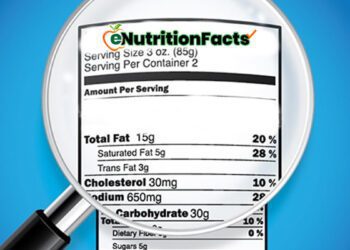
Food & Drink Nutrition Facts
Browse source-backed food profiles, serving-basis notes, branded records, and per-100 g nutrition comparisons.
Open cluster →Label hub
Nutrition Label Guides
Decode serving size, added sugar, sodium, Daily Value, label units, and claim language.
Open cluster →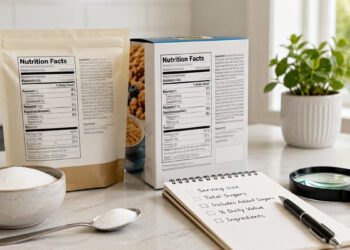
Ingredients hub
Clean Label & Ingredients
Understand ingredient lists, ultra-processed food concepts, additives, and cleaner label-reading context.
Open cluster →
Preparation hub
Preparation Impact
Understand raw vs. cooked nutrition differences, water loss, retention, and per-100 g interpretation.
Open cluster →Best starting routes
Start with the question you are trying to answer
Choose a focused path instead of scanning a random feed: search a food, verify a record, compare a basic item, understand a label term, or move directly into planning.
Curated latest / refreshed guides
Recent label-reading guides
Use these guides to decode label terms faster, compare nutrients with context, and avoid misreading serving size, %DV, added sugar, sodium, and preparation changes.
Editorial trust core
How we keep nutrition information accountable
eNutritionFacts combines source-linked food data, clear methodology notes, editorial review workflows, correction policies, and educational disclaimers. Nutrition values are provided for informational use and should not replace individualized professional guidance.
Nutrition Data Methodology
Review how values, serving basis, FDC IDs, and source notes are handled.
Open methodology →Expert Review Policy
See when data, nutrition, scientific, or clinical review is required before publication.
Open review policy →Corrections Policy
Learn how correction requests, updates, and source issues are handled.
Open corrections policy →Quick answers
How to use eNutritionFacts
Start with source-backed food lookup, then use guides and tools when you need label context, serving interpretation, or practical planning.
What is eNutritionFacts based on?
It uses source-linked food records, label explanations, editorial methods, and educational tools to make nutrition facts easier to verify and understand.
Why use FDC IDs?
FDC IDs help connect a nutrition profile to a specific USDA FoodData Central record instead of relying only on a broad food name.
Is this medical advice?
No. eNutritionFacts content is educational and informational only. Individual nutrition needs can vary and may require professional guidance.
Tools & data
Fast routes for food data and practical tools
Use these shortcuts when you want to search a food record, browse nutrition profiles, compare foods, or estimate recipe values without scanning the full navigation menu.