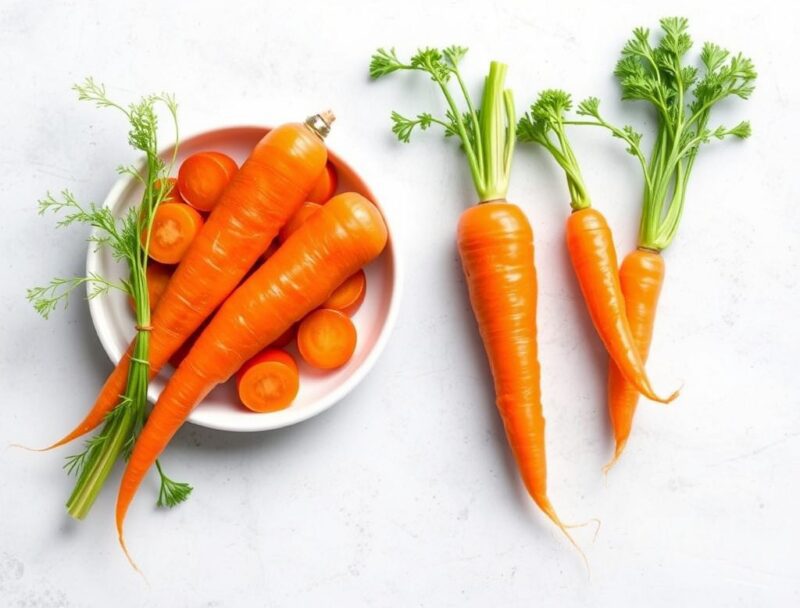
Raw carrots and cooked carrots differ in nutrient availability, water content, and serving weight, which affects how their nutrition facts appear on labels and databases. Raw carrots typically contain slightly more vitamin C and folate per 100 grams because these water-soluble vitamins degrade with heat, while cooked carrots often show higher beta-carotene bioavailability—meaning your body can absorb more of the vitamin A precursor even though the total amount on the label may look similar. Cooking also reduces water content through evaporation, concentrating nutrients per gram, so 100 grams of boiled carrots may deliver more fiber and minerals than the same weight of raw carrots. Serving size matters: a cup of raw sliced carrots weighs about 122 grams, while a cup of cooked sliced carrots weighs around 156 grams, changing the totals you see. Understanding these preparation-driven shifts helps you interpret labels accurately and choose the form that fits your meal plan.
What Changes Between Raw and Cooked Carrots
Cooking carrots alters their physical structure, water content, and nutrient profile. Heat softens cell walls, making some compounds easier to absorb while breaking down or leaching others. Water-soluble vitamins such as vitamin C and certain B vitamins dissolve into cooking water or degrade at high temperatures, reducing their measured content in the final product. Fat-soluble carotenoids, including beta-carotene, become more bioavailable when carrots are cooked because heat disrupts the plant matrix that binds them, allowing digestive enzymes to release and absorb these compounds more efficiently.
Boiling, steaming, roasting, and microwaving each produce different outcomes. Boiling can leach water-soluble nutrients into the cooking liquid, while steaming retains more because the carrot does not sit in water. Roasting concentrates sugars and caromelizes surfaces, reducing water content further and intensifying flavor. Microwaving with minimal water often preserves vitamin C better than prolonged boiling. The method you choose affects not only taste and texture but also the nutrient totals you see when you look up cooked carrots in a database or on a package label.
For a broader view of how preparation methods influence nutrient retention across vegetables, see our guide on how cooking changes nutrition facts.
Comparing Nutrients Per 100 Grams
Nutrition databases typically report values per 100 grams to standardize comparisons. Raw carrots contain approximately 88–90 grams of water per 100 grams, while boiled carrots drop to around 87–89 grams due to slight water loss during cooking. This small change concentrates fiber, minerals, and some vitamins slightly, so cooked carrots may show marginally higher values for calcium, potassium, and dietary fiber on a per-100-gram basis.
Vitamin C content in raw carrots ranges from 5 to 9 milligrams per 100 grams, depending on variety and freshness. Boiling can reduce this by 20–50 percent, leaving cooked carrots with 3 to 6 milligrams per 100 grams. Folate follows a similar pattern, with raw carrots providing about 19 micrograms per 100 grams and cooked carrots around 14 micrograms. These losses occur because both nutrients dissolve in water and degrade with prolonged heat exposure.
Beta-carotene levels on paper remain close—raw carrots contain roughly 8,300 micrograms per 100 grams, and cooked carrots show similar or slightly higher values. The key difference is bioavailability: studies indicate that cooking can increase beta-carotene absorption by 30–50 percent because heat breaks down cell walls and releases carotenoids from the food matrix. This means your body may absorb more vitamin A equivalents from cooked carrots even when the label shows comparable totals.
Fiber content also shifts. Raw carrots provide about 2.8 grams of dietary fiber per 100 grams, while cooked carrots may show 2.4 to 3.0 grams depending on the cooking method and water loss. The difference is small, but it matters when you track fiber intake precisely.
Serving Size and Volume Differences
Volume-based serving sizes—such as one cup—can mislead because cooked carrots pack more densely than raw. A cup of raw sliced carrots weighs approximately 122 grams, delivering around 50 calories, 12 grams of carbohydrate, and 3.4 grams of fiber. A cup of cooked sliced carrots weighs about 156 grams, providing roughly 55 calories, 13 grams of carbohydrate, and 4.7 grams of fiber. The cooked portion is heavier because the carrots soften and settle, fitting more mass into the same volume.
If you compare one cup of raw to one cup of cooked, the cooked version will show higher totals for most nutrients simply because you are eating more grams. To make a fair comparison, use the same weight—100 grams raw versus 100 grams cooked—or adjust for the weight difference when reading labels. Many nutrition databases and package labels list both per-serving and per-100-gram values, so check which basis the numbers use before drawing conclusions.
For step-by-step guidance on interpreting preparation-based differences, visit our raw vs cooked nutrition overview.
Common Comparison Mistakes
One frequent error is assuming that “raw” and “cooked” entries in a database refer to identical starting weights. If you weigh 100 grams of raw carrots and then cook them, the cooked weight may drop to 90–95 grams due to water evaporation. Comparing the cooked result to a database entry for 100 grams of cooked carrots will underestimate your actual intake because your portion is lighter.
Another mistake is ignoring added fats or seasonings. Roasted carrots tossed in olive oil will show higher calorie and fat totals than plain steamed carrots, but the difference comes from the oil, not the cooking method itself. Always check whether the database entry specifies “boiled, drained, no salt” or “roasted with oil” to match your preparation.
Draining liquid after boiling removes some dissolved nutrients, so “boiled, drained” entries reflect lower vitamin C and folate than “boiled, not drained.” If you drink the cooking water or use it in a soup, you recover some of those losses, but standard database entries assume you discard the liquid.
Finally, relying solely on label totals without considering bioavailability can skew your understanding. A raw carrot may list more vitamin C, but a cooked carrot delivers more absorbable beta-carotene. Both forms contribute valuable nutrients; the “better” choice depends on which nutrients you prioritize and how you prepare the food.
When to Use Nutrition Lookup
If you need source-linked data for a specific carrot preparation—such as FDC ID 170393 for raw carrots or FDC ID 169986 for boiled, drained carrots—use our Nutrition Lookup tool. It connects you to USDA FoodData Central records, showing exact values for water, fiber, vitamins, and minerals along with the preparation method and any added ingredients. This is especially useful when you track intake for meal planning, compare multiple cooking methods, or verify label claims on packaged carrot products.
The tool also helps you identify whether a database entry includes skin, specifies organic versus conventional, or lists baby carrots versus mature carrots. These details matter because skin contributes fiber and phytonutrients, and baby carrots are often peeled and pre-washed, altering their nutrient profile slightly.
Practical Checklist for Comparing Raw and Cooked Carrots
- Check the weight basis: Compare per 100 grams, not per cup, to avoid volume-driven distortions.
- Note the cooking method: Boiled, steamed, roasted, and microwaved carrots yield different nutrient profiles.
- Account for draining: “Boiled, drained” entries exclude nutrients lost to cooking water.
- Look for added ingredients: Oil, butter, salt, or sugar will increase calories and change macronutrient totals.
- Consider bioavailability: Cooked carrots offer better beta-carotene absorption even when raw carrots show similar label values.
- Verify the source: Use FDC IDs or trusted databases to confirm preparation details and avoid generic estimates.
For additional context on how preparation methods affect nutrient retention across food groups, explore our Preparation Impact category.
Frequently Asked Questions
Do cooked carrots have more sugar than raw carrots?
Cooking does not add sugar, but it can concentrate existing sugars by reducing water content. The total grams of sugar per 100 grams may appear slightly higher in cooked carrots due to evaporation, and heat also breaks down starches into simpler sugars, making them taste sweeter. The difference is small—typically less than 1 gram per 100 grams—and does not significantly affect blood glucose response for most people.
Which form provides more fiber?
Per 100 grams, raw and cooked carrots provide similar fiber totals, usually between 2.4 and 3.0 grams. Cooking softens fiber but does not destroy it. If you compare equal volumes—such as one cup—cooked carrots deliver more fiber because they weigh more per cup. For precise tracking, weigh your portion rather than measuring by volume.
Does boiling destroy all the vitamin C?
Boiling reduces vitamin C content by 20–50 percent depending on time, temperature, and water volume, but it does not eliminate it entirely. Steaming or microwaving with minimal water preserves more vitamin C. If you consume the cooking liquid in a soup or stew, you recover some of the dissolved vitamin C.
Are raw carrots harder to digest?
Raw carrots contain intact cell walls that require more chewing and digestive effort. Cooking softens these walls, making nutrients more accessible and the carrot easier to break down. People with sensitive digestion or certain gastrointestinal conditions may find cooked carrots gentler, but raw carrots are not inherently difficult to digest for most individuals.
Can I rely on package labels for cooked carrot nutrition?
Package labels for frozen or canned cooked carrots reflect the product as sold, including any added salt, preservatives, or processing liquids. If you cook fresh carrots at home, use a database entry that matches your method—boiled, steamed, or roasted—and adjust for any ingredients you add. Labels are accurate for the specific product but may not match your home preparation.
Which form is better for vitamin A intake?
Cooked carrots generally offer better vitamin A bioavailability because heat increases beta-carotene absorption. Even though raw and cooked carrots show similar beta-carotene totals on labels, your body converts more of the cooked carrot’s beta-carotene into active vitamin A. Pairing cooked carrots with a small amount of fat—such as olive oil—further enhances absorption.
Sources and Methodology
Nutrient values in this article are based on USDA FoodData Central records for raw carrots (FDC ID 170393) and boiled, drained carrots (FDC ID 169986). Bioavailability data on beta-carotene come from peer-reviewed studies on carotenoid absorption and the effects of heat processing on plant cell walls. Cooking method comparisons reflect standard laboratory analyses of water loss, vitamin retention, and mineral concentration. For full sourcing details and database access, see our data methodology page.
Educational Disclaimer
This article provides educational information about nutrient differences between raw and cooked carrots. It is not medical, diagnostic, or treatment advice. Individual nutrient needs vary based on age, health status, activity level, and other factors. If you have specific dietary requirements, food allergies, or medical conditions that affect nutrient absorption or metabolism, consult a registered dietitian or qualified healthcare provider before making significant changes to your diet. For our full disclaimer, visit our medical disclaimer page.