Ultra-processed foods are packaged or industrially made foods that usually contain ingredients, additives, or manufacturing steps not commonly used in home cooking. They are often discussed through the NOVA classification, a system that groups foods by the extent and purpose of processing rather than by calories, protein, sugar, or fat alone.
For the full ingredient-reading framework, use the Clean Label & Food Additives Guide.
This article explains what ultra-processed foods are, how the NOVA classification works, and how to use ingredient labels without turning food choices into fear-based rules.
What Does Ultra-Processed Mean?
Contents
- 1 What Does Ultra-Processed Mean?
- 2 The NOVA Classification: 4 Food Processing Groups
- 3 Ultra-Processed Foods Are Not the Same as All Processed Foods
- 4 How to Spot Ultra-Processed Foods on an Ingredient Label
- 5 Examples of Foods That May Be Ultra-Processed
- 6 Does Ultra-Processed Automatically Mean Unhealthy?
- 7 Clean Label vs Ultra-Processed: What Is the Difference?
- 8 How to Use NOVA Without Fear-Based Food Rules
- 9 Simple Label-Reading Checklist
- 10 How This Connects to Clean Label & Ingredients
- 11 Common Mistakes
- 12 Simple Checklist
- 13 Frequently Asked Questions
- 14 Bottom Line
- 15 Sources and Methodology
The term “ultra-processed food” does not simply mean that a food has been cooked, frozen, canned, or packaged. Many foods are processed in some way. Washing, cutting, freezing, drying, pasteurizing, milling, fermenting, and canning can all be forms of food processing.
In the NOVA classification, ultra-processed foods are generally products made through industrial formulation. They may include refined ingredients, modified starches, protein isolates, hydrogenated or interesterified oils, sweeteners, flavorings, colors, emulsifiers, thickeners, or other additives used to create a specific texture, taste, shelf life, or convenience.
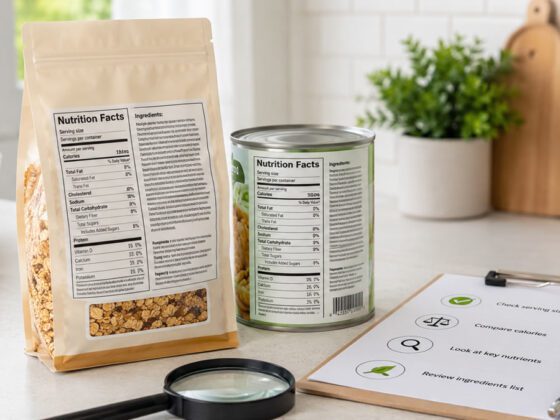
That is why the ingredient list is important. A food’s nutrition facts panel may show calories, protein, fat, carbohydrates, sodium, and sugar, but the ingredient list helps explain what the product is made from and how far it may be from a simpler food or home-style recipe.
The NOVA Classification: 4 Food Processing Groups
NOVA divides foods into four broad groups. These groups are based on processing level and processing purpose, not only on nutrient content.
| NOVA Group | Plain-English Meaning | Common Examples |
|---|---|---|
| Group 1: Unprocessed or minimally processed foods | Whole foods or foods changed mainly to make them safe, edible, or easier to store. | Fresh fruit, vegetables, plain beans, eggs, plain milk, fresh meat, plain yogurt, frozen vegetables, dry rice, oats. |
| Group 2: Processed culinary ingredients | Ingredients usually used to cook or season Group 1 foods. | Oil, butter, sugar, salt, vinegar, starch, honey. |
| Group 3: Processed foods | Foods made by adding Group 2 ingredients to Group 1 foods, often for preservation or flavor. | Canned vegetables with salt, cheese, simple breads, canned fish, fruit in syrup, salted nuts. |
| Group 4: Ultra-processed foods | Industrial formulations often made with multiple ingredients, additives, and food substances not usually used in home cooking. | Soft drinks, many packaged snacks, some instant meals, many sweetened breakfast cereals, reconstituted meat products, some packaged desserts. |
These examples are general. A product’s actual classification depends on its ingredients and processing. For example, plain oats and a sweetened oat-based snack bar may both start with oats, but their ingredient lists and processing levels can be very different.
Ultra-Processed Foods Are Not the Same as All Processed Foods
A common mistake is to treat “processed” and “ultra-processed” as the same thing. They are not the same in NOVA.
A bag of frozen plain vegetables is processed because the vegetables are cleaned, cut, and frozen. That does not automatically make it ultra-processed. Plain canned beans may be processed because they are cooked and canned with water and salt. A flavored snack product made with refined starches, flavorings, colors, emulsifiers, and sweeteners may fall closer to the ultra-processed category.
This distinction matters because food processing can serve different purposes. Some processing improves safety, storage, convenience, or access. Ultra-processing usually refers to more complex industrial formulations, especially when the product is built from extracted, refined, modified, or additive-based ingredients.
How to Spot Ultra-Processed Foods on an Ingredient Label
You cannot always classify a food perfectly by looking at the front of the package. The ingredient list usually gives better clues.
A product may be more likely to fit the ultra-processed category when the ingredient list includes several items that are not normally used in home cooking, especially when they appear together in a ready-to-eat or ready-to-heat product.
- Multiple sweeteners, such as glucose syrup, high-fructose corn syrup, dextrose, maltodextrin, or invert sugar.
- Modified starches, protein isolates, hydrolyzed proteins, or mechanically separated meat.
- Emulsifiers, stabilizers, thickeners, anti-caking agents, glazing agents, or foaming agents.
- Flavorings, flavor enhancers, artificial colors, or non-sugar sweeteners.
- A long ingredient list where whole foods appear in small amounts or not at all.
These signs are not a diagnosis of the food. They are label-reading clues. Some products are difficult to classify, and different researchers or databases may not always classify borderline foods in the same way.
For a step-by-step explanation of serving size, calories, % Daily Value, added sugars, sodium, and ingredients, read our guide on how to read Nutrition Facts labels.
Examples of Foods That May Be Ultra-Processed
Common examples often discussed as ultra-processed include soft drinks, packaged sweet or savory snacks, many instant noodles, some frozen ready meals, many candies, some reconstituted meat products, some packaged desserts, and many highly formulated breakfast cereals.
However, the category is not always obvious from the food name alone. Bread, yogurt, cereal, meat alternatives, protein bars, and plant-based drinks can vary widely. One product may have a short ingredient list, while another similar-looking product may include several additives, sweeteners, flavors, or modified ingredients.
For that reason, the safest approach is to compare products by both the nutrition facts panel and the ingredient list.
Does Ultra-Processed Automatically Mean Unhealthy?
NOVA is useful, but it is not a complete nutrition score. It does not replace the nutrition facts panel, ingredient list, serving size, or professional nutrition guidance when needed.
Research has reported associations between higher ultra-processed food intake and poorer diet quality or health outcomes in many populations. At the same time, experts continue to discuss how much of the risk is related to ultra-processing itself and how much is related to common nutritional patterns in many ultra-processed products, such as higher energy density, sodium, saturated fat, free sugars, or lower fiber.
For readers, the practical lesson is not to panic over every packaged food. A more useful approach is to learn how to read labels, compare products, and notice when a food is mostly built from refined substances, additives, sweeteners, flavor systems, and few recognizable whole-food ingredients.
Clean Label vs Ultra-Processed: What Is the Difference?
“Clean label” is not a single official nutrition classification. It is a marketing and consumer-facing term that usually suggests shorter ingredient lists, more recognizable ingredients, fewer artificial additives, or simpler product positioning.
A clean-label claim does not automatically mean a product has a stronger nutrition profile. A food can have a simple ingredient list and still be high in sugar, sodium, or saturated fat. Another food may contain additives for safety or stability and still provide useful nutrients. This is why eNutritionFacts reviews clean-label claims as label information to examine, not as claims to accept automatically.
How to Use NOVA Without Fear-Based Food Rules
NOVA can be helpful when it is used as a label-reading tool, not as a way to shame food choices. Many people rely on packaged foods because of time, budget, access, storage, work schedules, or cooking limitations.
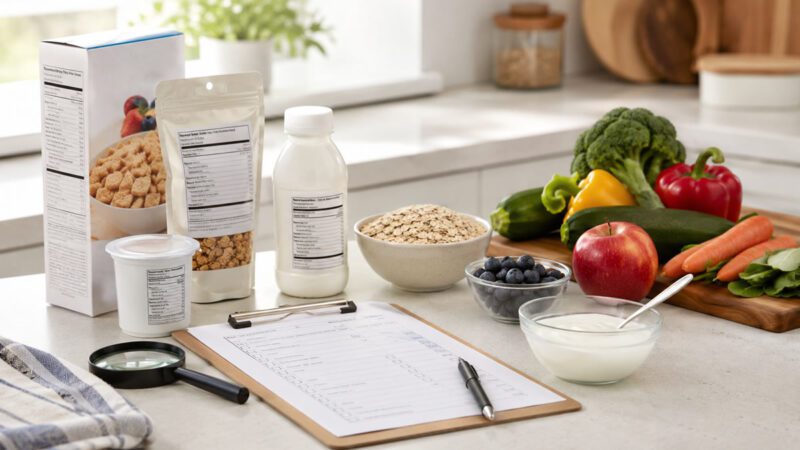
A practical approach is to compare options within the same food category. For example, compare two breakfast cereals, two yogurts, two snack bars, or two frozen meals. Look at the ingredient list, serving size, fiber, added sugar, sodium, protein, and saturated fat. This gives a fuller picture than the front-of-pack marketing claim alone.
Simple Label-Reading Checklist
- Start with the ingredient list, not only the front label.
- Check whether the first ingredients are recognizable foods or refined substances.
- Look for multiple sweeteners, flavorings, colors, emulsifiers, or modified ingredients.
- Compare the nutrition facts panel for serving size, added sugar, sodium, fiber, protein, and saturated fat.
- Be cautious with “natural,” “clean,” “plant-based,” or “high protein” claims unless the full label supports them.
- When possible, compare similar products side by side instead of judging one product in isolation.
How This Connects to Clean Label & Ingredients
Ultra-processed food classification is one part of ingredient-label literacy. It helps explain why two products with similar calories can still look different when you examine their ingredient lists, additives, sweeteners, and processing level.
You can explore more articles in the Clean Label & Ingredients category. For broader label-reading basics, see our Nutrition Label Guides.
Common Mistakes
- Treating one ingredient name as enough evidence to judge the whole product.
- Assuming a clean-label claim automatically means the product has a stronger nutrition profile.
- Ignoring serving size, sodium, added sugars, fiber, and saturated fat when comparing similar products.
Simple Checklist
- Read the full ingredient list, not only the front label.
- Look for repeated sweeteners, refined starches, flavors, colors, or additive groups.
- Compare similar products side by side.
- Check Nutrition Facts values before accepting a clean-label claim.
- Avoid fear-based food rules unless the claim is well sourced and reviewed.
Frequently Asked Questions
What is the easiest way to check this on a food label?
Start with the ingredient list, then compare the Nutrition Facts panel and serving size. The front of the package is not enough by itself.
Does a clean-label claim always mean a product has a better nutrition profile?
No. A clean-label claim should be checked against the full ingredient list, serving size, and nutrient values. The front of the package is not enough by itself.
Can two similar foods have different processing levels?
Yes. Two similar-looking products can use very different ingredients, additives, sweeteners, or processing methods.
Should one ingredient decide whether a food is acceptable?
Usually no. Ingredient context, serving size, source notes, and the overall food pattern all matter.
Bottom Line
Ultra-processed foods are usually industrial formulations made with multiple ingredients, additives, and food substances not typically used in home cooking. In NOVA, they belong to Group 4.
The most useful takeaway is not that every packaged food should be avoided. Instead, use NOVA as one tool alongside the nutrition facts panel, ingredient list, serving size, and overall food pattern. A careful label-reading habit is more useful than relying on front-of-pack claims or simple food rankings.
Sources and Methodology
This article is based on the NOVA food classification framework, including peer-reviewed descriptions of ultra-processed foods and public-health summaries discussing processed food classification. Key references include the FAO report on ultra-processed foods, the Public Health Nutrition article “Ultra-processed foods: what they are and how to identify them,” and the UK Scientific Advisory Committee on Nutrition rapid evidence update on processed foods and health.
This article is for educational and informational purposes only and is not medical advice. Food classification systems can help with label reading, but individual nutrition needs may vary.