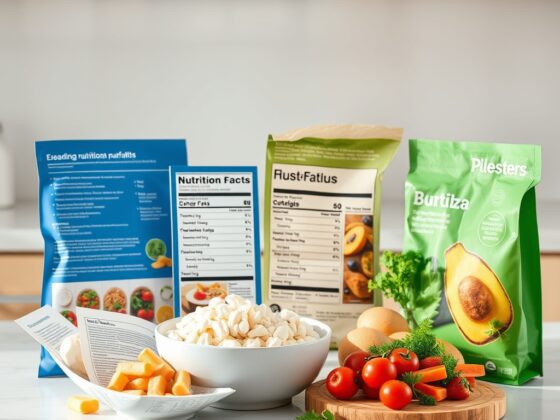
“Natural flavors” on a food label refers to flavoring substances derived from plant or animal sources, including spices, fruits, vegetables, herbs, bark, roots, meat, seafood, poultry, eggs, dairy products, or fermentation products. Under U.S. Food and Drug Administration (FDA) regulations, natural flavors must come from natural sources but may be chemically processed or combined with carriers and solvents. The term does not guarantee that a product is minimally processed, organic, or free from synthetic processing aids. Natural flavors are listed in the ingredient list when they contribute taste or aroma but do not need to disclose the specific source material or individual chemical components. Understanding this term helps you interpret ingredient lists more accurately when comparing packaged foods.
Where “Natural Flavors” Appears on the Label
The term “natural flavors” appears in the ingredient list, not in the Nutrition Facts panel. Ingredients are listed in descending order by weight, so the position of natural flavors tells you how much of the product by weight consists of these flavoring substances. If natural flavors appear near the beginning of the list, they make up a larger proportion of the product; if they appear near the end, they represent a smaller amount.
Natural flavors do not contribute significant calories, protein, fat, or carbohydrates in most cases, so they typically do not affect the nutrient values shown in the Nutrition Facts panel. However, they do affect taste, aroma, and the overall sensory experience of the food. When you read nutrition labels, remember that the ingredient list and the Nutrition Facts panel serve different purposes: one lists what is in the product, the other quantifies nutrients per serving.
What “Natural Flavors” Means Under FDA Regulations
The FDA defines natural flavors in Title 21, Section 101.22 of the Code of Federal Regulations. According to this regulation, a natural flavor is “the essential oil, oleoresin, essence or extractive, protein hydrolysate, distillate, or any product of roasting, heating or enzymolysis” derived from plant or animal material. The source material can include spices, fruits, vegetables, herbs, bark, buds, roots, leaves, meat, seafood, poultry, eggs, dairy products, or fermentation products.
Natural flavors may be extracted using solvents, heat, enzymes, or fermentation. The resulting flavor compounds can be concentrated, purified, or combined with carriers such as propylene glycol, glycerin, or alcohol to stabilize them for use in food manufacturing. The regulation permits these processing steps as long as the original source material is natural. This means that “natural” refers to the origin of the flavor, not the absence of chemical processing.
Natural flavors are distinct from artificial flavors, which are synthesized from non-natural starting materials. Both natural and artificial flavors are subject to FDA safety standards, and both must be listed in the ingredient list. The choice between natural and artificial flavors is often driven by consumer preference, cost, and flavor profile rather than safety or nutritional differences.
Common Interpretation Mistakes
One common mistake is assuming that “natural flavors” means the product is minimally processed or whole-food based. Natural flavors are highly processed flavor extracts, even though they originate from natural sources. A product with natural flavors may still contain refined sugars, refined grains, or other processed ingredients.
Another mistake is expecting transparency about the specific source. The ingredient list does not have to specify whether the natural flavor comes from fruit, spice, animal tissue, or fermentation. A strawberry-flavored product may list “natural flavors” without clarifying whether the flavor comes from strawberries, other fruits, or a combination of plant extracts. This lack of specificity can be confusing for people with allergies or dietary restrictions.
Some readers assume that natural flavors are always plant-based. However, natural flavors can be derived from animal sources, including meat, poultry, seafood, eggs, and dairy. If you follow a vegetarian or vegan diet, the presence of natural flavors does not guarantee that the product is free from animal-derived ingredients. You may need to contact the manufacturer or look for third-party certifications such as “Certified Vegan” to confirm the source.
Finally, some people believe that natural flavors are nutritionally different to artificial flavors. Both types of flavors contribute negligible nutrients and are used in small amounts. The choice between natural and artificial flavors does not significantly affect the overall nutritional quality of a food, which depends more on the macronutrient profile, fiber content, and presence of whole-food ingredients.
Serving Size, Percent Daily Value, and Natural Flavors
Natural flavors do not appear in the Nutrition Facts panel because they are present in such small amounts that they do not contribute meaningful calories, protein, fat, carbohydrates, vitamins, or minerals. The serving size and percent Daily Value (%DV) shown on the label reflect the nutrients from all ingredients combined, but natural flavors typically represent less than 1% of the product by weight.
When comparing two products, focus on the full ingredient list and the nutrient values in the Nutrition Facts panel rather than the presence or absence of natural flavors alone. For example, two yogurt products may both list natural flavors, but one may contain added sugars while the other does not. The added sugar content, shown in grams per serving and as a %DV, is a more useful comparison point than the type of flavoring used.
If you want to compare the nutrient profiles of similar foods with source-linked data, use the Nutrition Lookup tool to find FDC records and see how different formulations or brands compare on a per-100-gram or per-serving basis.
When to Use Nutrition Lookup
Use Nutrition Lookup when you need to compare the nutrient content of products that list natural flavors in their ingredient lists. The tool provides access to USDA FoodData Central records, which include detailed nutrient breakdowns and, in some cases, ingredient lists for branded foods. You can search by food name, brand, or FDC ID to find the specific product you are evaluating.
Nutrition Lookup is especially useful when you want to see how natural flavors fit into the overall formulation of a product. For example, you can compare a flavored yogurt with natural flavors to a plain yogurt without added flavors, examining differences in sugar, protein, and calorie content per 100 grams. This side-by-side comparison helps you understand whether the flavoring is accompanied by added sugars or other ingredients that affect the nutritional profile.
The tool also helps you verify serving sizes and %DV calculations. Because natural flavors do not contribute significant nutrients, any differences in nutrient values between similar products are likely due to other ingredients, such as sweeteners, fats, or fortification. Nutrition Lookup allows you to isolate these variables and make more informed comparisons.
Practical Checklist for Evaluating Natural Flavors
- Read the full ingredient list: Natural flavors are just one ingredient. Check for added sugars, refined grains, and other processed ingredients that affect overall food quality.
- Check the position in the ingredient list: Ingredients are listed by weight. If natural flavors appear near the end, they make up a small portion of the product.
- Look for allergen statements: Natural flavors can be derived from common allergens such as milk, eggs, or soy. Check the “Contains” statement or allergen advisory below the ingredient list.
- Consider dietary restrictions: If you follow a vegetarian, vegan, or religious dietary practice, contact the manufacturer to confirm the source of natural flavors, as the label does not specify plant or animal origin.
- Compare nutrient values: Use the Nutrition Facts panel to compare calories, sugar, sodium, and other nutrients per serving. Natural flavors do not affect these values, but other ingredients do.
- Use Nutrition Lookup for detailed comparisons: Access FDC records to compare similar products on a per-100-gram basis and see full ingredient lists for branded foods.
- Avoid assumptions about processing: “Natural” refers to the source, not the degree of processing. Natural flavors are chemically extracted and concentrated, even though they come from natural materials.
Frequently Asked Questions
Are natural flavors the same as artificial flavors?
No. Natural flavors are derived from plant or animal sources, while artificial flavors are synthesized from non-natural starting materials. Both are chemically processed and regulated by the FDA for safety. The main difference is the origin of the flavor compounds, not the safety or nutritional content.
Do natural flavors contain allergens?
Natural flavors can be derived from common allergens such as milk, eggs, soy, wheat, tree nuts, peanuts, fish, or shellfish. If a natural flavor contains a major allergen, the FDA requires that the allergen be listed in the “Contains” statement or in parentheses after the ingredient. However, if the allergen is present in trace amounts or as a processing aid, it may not be listed. If you have severe allergies, contact the manufacturer for clarification.
Are natural flavors vegan?
Not always. Natural flavors can be derived from animal sources, including meat, poultry, seafood, eggs, and dairy. The ingredient list does not specify the source. If you follow a vegan diet, look for products with third-party vegan certification or contact the manufacturer to confirm that the natural flavors are plant-based.
Why don’t labels specify the source of natural flavors?
FDA regulations do not require manufacturers to disclose the specific source of natural flavors in the ingredient list. This allows companies to protect proprietary flavor formulations and simplifies labeling. However, if a natural flavor contains a major allergen, the allergen must be declared separately.
Do natural flavors add calories or nutrients?
Natural flavors are used in very small amounts and typically contribute negligible calories, protein, fat, carbohydrates, vitamins, or minerals. They do not appear in the Nutrition Facts panel because their nutrient contribution is not significant. The nutrient values you see on the label come from other ingredients in the product.
How can I compare products with natural flavors?
Compare the full ingredient list and the Nutrition Facts panel, focusing on added sugars, sodium, saturated fat, fiber, and protein per serving. Use Nutrition Lookup to access FDC records and compare similar products on a per-100-gram basis. The presence of natural flavors alone does not determine the nutritional quality of a food.
Are natural flavors processed?
Yes. Natural flavors are extracted, concentrated, and often combined with carriers or solvents. The term “natural” refers to the origin of the flavor source, not the absence of processing. Both natural and artificial flavors undergo chemical processing to create stable, concentrated flavor compounds for use in food manufacturing.
Sources and Methodology
This article uses FDA labeling regulations from Title 21, Section 101.22 of the Code of Federal Regulations to define natural flavors and explain their use on food labels. Ingredient list interpretation follows FDA guidance on ingredient declaration and allergen labeling. Nutrient data references are drawn from USDA FoodData Central when specific food records are discussed. No numeric nutrient values or FDC IDs are invented; all data points are source-linked or described in general terms consistent with regulatory definitions.
For more information on how we evaluate and present food data, see our Data Methodology page. To explore additional label terms and ingredient guides, visit the Nutrition Label Guides category.
Educational Disclaimer
This article is for educational purposes only and does not constitute medical, dietary, or professional advice. Label interpretation and ingredient evaluation are general educational topics. If you have food allergies, dietary restrictions, medical conditions, or specific health concerns, consult a registered dietitian, allergist, or other qualified healthcare professional before making dietary changes. For full terms, see our Medical Disclaimer.