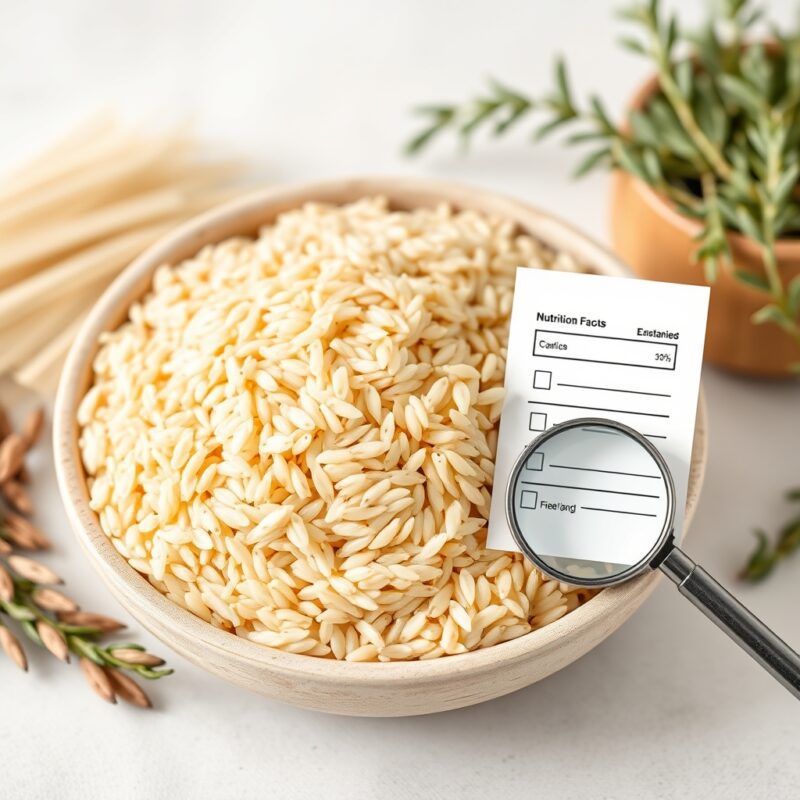
Brown Rice is commonly searched for calories, macronutrients, serving-size values, and selected vitamins or minerals. This page summarizes the selected USDA FoodData Central record for Rice, brown, long-grain, cooked (Includes foods for USDA's Food Distribution Program) and shows values per 100g and per listed serving when available.
Selected record note: This page uses the USDA record for Rice, brown, long-grain, cooked (Includes foods for USDA's Food Distribution Program). Other entries, including different preparation forms, branded products, restaurant-style foods, or source records, can show different nutrition values.
This page is provided for educational and informational purposes only and is not medical advice.
Nutrition facts for Rice, brown, long-grain, cooked (Includes foods for USDA's Food Distribution Program)
Contents
- 1 Nutrition facts for Rice, brown, long-grain, cooked (Includes foods for USDA's Food Distribution Program)
- 2 What is brown rice?
- 3 Brown Rice nutrition summary
- 4 Per 100g nutrition table
- 5 Serving-size nutrition table
- 6 Calories and macros
- 7 Carbohydrates, fiber, and sugars
- 8 Potassium and selected minerals
- 9 Vitamins and minerals
- 10 Serving size explained
- 11 Why nutrition values may differ
- 12 How to use this nutrition data
- 13 Data source
- 14 Compare with similar foods
- 15 Related nutrition data resources
- 16 Frequently asked questions
- 17 Sources and methodology
- 18 Disclaimer
What is brown rice?
Brown Rice is listed here as a food composition profile rather than as a recipe, diet plan, or medical recommendation. The selected record describes Rice, brown, long-grain, cooked (Includes foods for USDA's Food Distribution Program), so the values may differ from cooked, dried, canned, fortified, restaurant-style, or packaged versions that use a different source record.
Because food composition data can be used in different ways, this page includes both per 100g values and serving-size values when the USDA record provides a usable serving gram weight. The per 100g table is useful for comparing foods on the same basis, while the serving-size table may feel more practical for everyday reading.
Brown Rice nutrition summary
The selected record for Rice, brown, long-grain, cooked (Includes foods for USDA's Food Distribution Program) lists calories, carbohydrate, protein, total fat, and available micronutrients. Per 100g, this record provides 123kcal, 2.74g protein, 25.6g carbohydrate, and 0.97g total fat. These numbers describe the selected USDA record only and should not be interpreted as personalized dietary advice.
On the listed serving basis of cup (202g), the same record provides 248kcal, 5.53g protein, 51.7g carbohydrate, and 1.96g total fat. Actual portions can be smaller or larger than the listed serving, so serving-size values should be read as a reference point.
Per 100g nutrition table
| Nutrient | Amount | %DV |
|---|---|---|
| Calories | 123kcal | — |
| Total Fat | 0.97g | 1% |
| Saturated Fat | 0.26g | 1% |
| Trans Fat | 0g | — |
| Cholesterol | 0mg | 0% |
| Sodium | 4mg | 0% |
| Total Carbohydrate | 25.6g | 9% |
| Dietary Fiber | 1.6g | 6% |
| Total Sugars | 0.24g | — |
| Protein | 2.74g | 5% |
| Vitamin D | 0mcg | 0% |
| Calcium | 3mg | 0% |
| Iron | 0.56mg | 3% |
| Potassium | 86mg | 2% |
Serving-size nutrition table
Serving basis: cup (202g) · FDC foodPortions field.
| Nutrient | Amount | %DV |
|---|---|---|
| Calories | 248kcal | — |
| Total Fat | 1.96g | 2% |
| Saturated Fat | 0.53g | 2% |
| Trans Fat | 0g | — |
| Cholesterol | 0mg | 0% |
| Sodium | 8.08mg | 0% |
| Total Carbohydrate | 51.7g | 18% |
| Dietary Fiber | 3.23g | 12% |
| Total Sugars | 0.48g | — |
| Protein | 5.53g | 10% |
| Vitamin D | 0mcg | 0% |
| Calcium | 6.06mg | 0% |
| Iron | 1.13mg | 6% |
| Potassium | 174mg | 4% |
Calories and macros
Per 100g, this selected record lists 123kcal, 2.74g protein, 25.6g carbohydrate, and 0.97g total fat. These values describe the selected food record only and may differ from other raw, cooked, branded, or prepared versions.
Calories and macronutrients are often the first values readers compare, but they do not describe the full food context. The selected FDC ID, preparation state, serving basis, and data type should be checked before using these numbers in a comparison or guide.
Carbohydrates, fiber, and sugars
The selected USDA record lists total carbohydrate, dietary fiber, and total sugars when those nutrients are available. Per 100g, this record lists 25.6g carbohydrate, 1.6g dietary fiber, and 0.24g total sugars.
Total sugars in a whole-food or simple food record are not automatically the same as added sugars on a packaged food label. Added sugars are a separate label concept and should only be discussed when the source record or product label supports it.
Potassium and selected minerals
The selected USDA record lists available mineral values such as potassium, calcium, iron, and sodium. Per 100g, this record lists 86mg potassium, 3mg calcium, 0.56mg iron, and 4mg sodium.
These values help describe the nutrient composition of the selected food record. They should not be used as a substitute for individualized nutrition guidance, especially for people who need to monitor specific nutrients for personal medical or dietary reasons.
Vitamins and minerals
The mineral and vitamin values below come from the same USDA FoodData Central record. Review missing nutrients before using this page as a source-backed food profile.
| Nutrient | Amount | %DV |
|---|---|---|
| Vitamin D | 0mcg | 0% |
| Calcium | 3mg | 0% |
| Iron | 0.56mg | 3% |
| Potassium | 86mg | 2% |
| Sodium | 4mg | 0% |
Serving size explained
This page shows values per 100g and, when available, per USDA-listed serving. Per 100g values are useful because they make it easier to compare foods with the same weight basis. Serving-size values can be more practical for readers who want to understand a listed portion.
For this record, the listed serving basis is cup (202g) from the FDC foodPortions field. Because household measures can vary in real-world use, the per 100g values should be treated as the most stable comparison basis. Actual portions can vary depending on food size, edible weight, preparation, and how the food is served.
Why nutrition values may differ
Different nutrition databases and food records can show different values for the same general food name. Differences may come from preparation method, processing, ripeness or maturity, edible portion, fortification, brand formulation, sampling methods, analytical methods, serving size, or data type.
For careful comparisons, use records with similar preparation forms and data types whenever possible. A cooked generic food record should not be treated as identical to a branded product, a restaurant-style item, or a prepared dish unless the source record supports that comparison.
How to use this nutrition data
Use this page as a source-backed reference for checking the selected food record, comparing per 100g values, and understanding the listed serving-size basis. For editorial work, always verify the FDC ID, data type, source record, and last checked date before quoting values.
For personal dietary decisions, this information should be treated as general food composition data. It does not replace advice from a qualified professional who can consider individual health needs, dietary goals, medications, allergies, lab values, or other personal factors.
Data source
Data source: Values on this page come from USDA FoodData Central record FDC ID 169704 for Rice, brown, long-grain, cooked (Includes foods for USDA's Food Distribution Program). The record type is SR Legacy, and the values were last checked on 2026-05-27.
Serving-size values are shown only when a usable USDA portion weight is available. Because household measures can vary, the per 100g values should remain the main comparison basis.
Citation: U.S. Department of Agriculture, Agricultural Research Service. FoodData Central. FDC ID 169704. [Internet]. [cited 2026-05-27]. Available from https://fdc.nal.usda.gov/.
Compare with similar foods
Use the Nutrition Lookup tool to compare this food with up to three similar foods. For editorial use, compare records with similar data types and preparation forms whenever possible.
Related nutrition data resources
You can browse more profiles in Food & Drink Nutrition Facts, review our Nutrition Data Methodology, or read the Medical Disclaimer for the educational limits of this content.
Frequently asked questions
Are these values per serving or per 100g?
The main table uses a per 100g basis. A serving-size table is included only when the USDA record provides a usable serving gram weight. When serving-size values are shown, they are calculated from the selected record and listed serving basis.
Why can different entries show different values?
USDA FoodData Central includes different data types, food forms, preparation states, and branded records. Always choose the record that matches the food being discussed.
Are total sugars the same as added sugars?
No. Total sugars describe the sugar value listed for the selected food record. Added sugars are a separate label concept used when sugars are added during processing or preparation, usually in packaged foods.
Why does this page include a source record and FDC ID?
The FDC ID makes the page easier to check and update. It shows which USDA FoodData Central record was selected, which is important because similar food names can have different nutrient values.
Can this page replace personal nutrition advice?
No. This page is educational and informational only. It does not provide medical advice or individualized dietary guidance.
Sources and methodology
Nutrition values were extracted from USDA FoodData Central and displayed using a consistent eNutritionFacts review workflow. Values are shown per 100g unless a reviewed serving basis is available.
The selected food record, FDC ID, data type, serving basis, and last checked date are included so readers and editors can trace the source of the values. Nutrition values may be rounded for readability, and % Daily Value is estimated only when a matching nutrient and unit are available.
Disclaimer
Content on this page is provided for educational and informational purposes only and is not medical advice. Always review the original source record and consult a qualified professional for personal dietary needs.