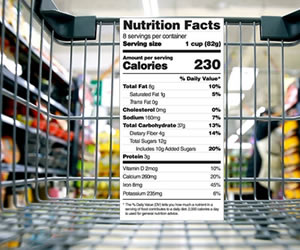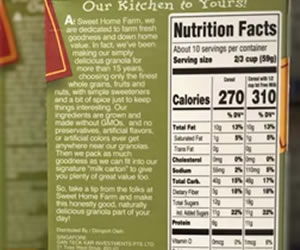
Understanding the nutrition facts on food labels is crucial for making informed dietary choices. These labels provide a wealth of information about the nutritional value of food products, helping consumers identify the amounts of calories, macronutrients (fats, proteins, and carbohydrates), vitamins, and minerals present in a serving of food. Additionally, they offer insights into serving sizes and the number of servings per container, which are essential for portion control and caloric intake management.
With obesity and diet-related health issues on the rise globally, the ability to read and understand these labels has never been more important. By familiarizing ourselves with the components of nutrition labels, we can better navigate the vast array of food products available, making choices that align with our health goals and dietary needs. This blog post aims to demystify the various elements of nutrition facts labels, providing you with the knowledge to select healthier foods, control portion sizes, and understand the nutritional content of your meals.
Understanding Serving Size and Servings Per Container
One of the first things to look at on a nutrition label is the serving size and the number of servings per container. The serving size reflects the amount of food that is typically consumed in one sitting and is not necessarily a recommendation of how much you should eat. It’s the base upon which the nutritional information is provided. This means that if a package says the serving size is 1 cup and you consume 2 cups, you need to double the nutritional information to understand what you’ve actually ingested.
The importance of serving size cannot be overstated. It influences the number of calories and all nutrient amounts listed on the top part of the label. Misinterpreting serving sizes is a common mistake that can lead to unintentional overconsumption of calories and nutrients. For instance, a bag of chips might seem like it contains only one serving, but if the label indicates it contains three servings, eating the whole bag means you’ve consumed triple the calories and nutrients listed per serving.
Calories and Caloric Density
Calories provide a measure of how much energy you get from a serving of this food. Understanding calories on food labels is crucial for managing weight, as consuming more calories than you expend leads to weight gain. The caloric density of food, which refers to the number of calories in a given weight of food, is also an important concept. Foods with high caloric density provide a large number of calories in a small amount of food, such as nuts, while foods with low caloric density, like fruits and vegetables, provide fewer calories for a larger volume, making them essential for weight management.
Macronutrients: Fats, Proteins, and Carbohydrates
The macronutrients listed on food labels are fats, proteins, and carbohydrates, each playing a unique role in the body.
- Fats are essential for energy, but the type of fat matters. Saturated and trans fats, often found in processed foods, should be limited, whereas unsaturated fats, found in foods like avocados and olive oil, are beneficial for heart health.
- Proteins are the building blocks of bones, muscles, and skin and are crucial for repairing tissues and maintaining a healthy immune system.
- Carbohydrates include fibers and sugars. Fiber is beneficial for digestion and can help control blood sugar levels. Sugars should be looked at carefully; natural sugars in dairy and fruit are acceptable, but added sugars should be minimized.
Vitamins and Minerals
These micronutrients are crucial for body functions, including bone health, immune function, and blood clotting. While the body needs only small amounts of vitamins and minerals, they’re essential for good health. Nutrition labels highlight key vitamins and minerals, such as Vitamin D, Calcium, Iron, and Potassium, providing their amounts and Percent Daily Value (%DV), which helps you understand how a serving of food fits into the daily recommended intake.
The Ingredients List
Beyond the numerical nutrition facts, the ingredients list provides insight into the quality of the food. Ingredients are listed in order of quantity, from highest to lowest. This list can reveal the presence of whole foods vs. processed ingredients, added sugars, artificial colors, or preservatives, helping consumers choose cleaner, less processed options.
Understanding ‘Free-from’ and Health Claims
Labels often boast about being “free-from” certain ingredients, like gluten, or having health benefits, such as “lowers cholesterol.” While these claims can guide those with specific dietary needs or goals, it’s important to understand the regulations behind these claims and to still refer to the nutrition facts and ingredients list for the complete nutritional profile.
FAQ Section
How Do I Determine the Healthiness of a Product from Its Nutrition Label?
Determining the healthiness of a product from its nutrition label requires a holistic approach, considering various aspects of the label:
- Look at the serving size: Compare it to how much you actually consume. A product might seem healthy until you realize that the serving size is much smaller than expected, leading to overconsumption of calories and nutrients.
- Assess the calorie count: Consider how this fits into your daily caloric needs. Remember, the number of calories tells you how much energy a food provides but not its nutritional quality.
- Evaluate macronutrient balance: Aim for a balance of macronutrients (fats, proteins, carbohydrates) suitable for your dietary goals. For example, if managing blood sugar, focus on foods with high fiber and low added sugars.
- Check the types of fats: Prioritize products with unsaturated fats while limiting those high in saturated and trans fats.
- Examine the sodium content: High sodium intake is linked to increased blood pressure. Look for low-sodium options, especially if you’re managing blood pressure.
- Consider the vitamins and minerals: Foods rich in essential vitamins and minerals contribute to overall health. Look for foods high in fiber, vitamins A and C, calcium, and iron.
- Inspect the ingredients list: The fewer the ingredients, the better. Preference should be given to whole foods and those with ingredients you recognize as close to their natural state.
What Does ‘Percent Daily Value’ Mean and How Can I Use It?
Percent Daily Value’ (%DV) on nutrition labels helps you understand the nutrient content of a food item in the context of a total daily diet. It is based on a daily diet of 2,000 calories, which is a general benchmark for nutrition advice, although individual caloric needs may vary.
- Interpreting %DV: A %DV of 5% or less per serving is considered low for all nutrients, which is beneficial for nutrients you want to consume less of, such as saturated fat, cholesterol, and sodium. Conversely, a %DV of 20% or more is considered high, beneficial for nutrients you want more of, such as fiber, vitamins, and minerals.
- Using %DV for dietary management: You can use %DV to compare products and make choices that align with your health goals. For instance, if you’re focusing on heart health, you might choose foods with a lower %DV of sodium and higher %DVs of potassium, calcium, and magnesium.
- Balancing your diet: No single food provides all the nutrients you need. Use %DV to balance nutrient intake across different foods throughout the day, aiming to get 100% of each nutrient without exceeding it significantly, especially for saturated fat, added sugars, and sodium.
How Can I Understand Serving Sizes Better to Control My Caloric Intake?
Understanding and controlling serving sizes is crucial for managing caloric intake and maintaining a balanced diet. Here’s how to get a better grasp on serving sizes:
- Use visual cues: Familiarize yourself with visual equivalents for serving sizes. For example, a serving of meat (3 ounces) is about the size of a deck of cards, and a serving of cooked pasta (1/2 cup) is about the size of a tennis ball.
- Read labels carefully: Always check the serving size on the label and compare it to the amount you’re actually eating. Adjust your portion sizes accordingly.
- Measure your food: Initially, use measuring cups, spoons, or a food scale to help you understand what the serving sizes look like. Over time, you’ll be able to estimate serving sizes more accurately without measuring tools.
- Portion control when eating out: Restaurant portions can be significantly larger than standard serving sizes. Consider asking for a half portion, sharing a meal, or boxing half of it to take home for later.
This detailed approach to understanding serving sizes will help you better manage your diet and caloric intake, making healthier eating choices easier.
Are All Sugars Listed on Food Labels the Same?
Not all sugars listed on food labels are the same, and understanding the distinction is crucial for making healthier choices. Sugars on nutrition labels can be broadly categorized into two types: natural sugars and added sugars.
- Natural Sugars: These are found inherently in foods like fruits (fructose) and milk (lactose). They come with additional nutrients, such as fiber in fruit or calcium in milk, making them a healthier choice.
- Added Sugars: Added during processing or preparation, these sugars contribute additional calories without essential nutrients. Common sources include sugary drinks, sweets, and processed foods. The American Heart Association recommends limiting added sugars to no more than 6 teaspoons (25 grams) per day for women and 9 teaspoons (38 grams) for men.
To assess sugars:
- Check the ingredients list for words ending in “-ose” (like glucose, fructose, sucrose) or terms such as syrup, honey, and cane sugar. These indicate added sugars.
- Use the nutrition facts label: In 2016, the FDA required that added sugars be included on the nutrition label, making it easier to see how much sugar has been added to the product.
- Consider the total sugar content in the context of your total diet and try to minimize foods high in added sugars.
Understanding the types of sugars and their sources can guide you toward healthier eating habits, emphasizing whole foods and minimizing processed foods high in added sugars.
How Can I Quickly Assess the Nutritional Value of Packaged Foods?
Quickly assessing the nutritional value of packaged foods involves a few key steps that can be easily remembered and applied even during a rushed shopping trip:
- Start with the Serving Size: Ensure you’re aware of how the serving size relates to your usual portion. This affects all the other nutritional information on the label.
- Check the Calories: Identify how many calories are in one serving and consider this in the context of your daily caloric needs.
- Evaluate Macronutrients: Look at the fats, proteins, and carbohydrates. Prioritize foods with healthy fats, adequate protein, and complex carbohydrates with fiber. Be wary of products with high levels of saturated and trans fats, added sugars, and sodium.
- Percent Daily Values (%DV): Use %DV to quickly gauge whether a food item is high or low in a particular nutrient. Remember, 5% DV or less is low, and 20% DV or more is high.
- Ingredients List: The shorter, the better. Look for whole food ingredients and avoid those with a long list of additives or ingredients you can’t pronounce.
- Look for Added Sugars: With the new labeling requirements, added sugars are now clearly listed, helping you choose foods with minimal or no added sugars.
- Check for Key Nutrients: Depending on your health goals, you may want specific nutrients like fiber, vitamin D, calcium, iron, and potassium.
By following these steps, you can make a quick yet informed decision about the nutritional value of packaged foods, aligning your choices with your dietary goals and health needs.